


This article is for general information only and is not medical advice. Speak to your GP before fasting if you have a medical condition.
A 2015 review by King Saud University researchers found fasting brings genuine physiological changes, from improved cholesterol balance to reduced inflammation. What you eat and drink at the end of a fast matters too, and raw organic honey water is a genuinely well-reasoned choice.
Introduction
Every year, roughly one billion Muslims around the world fast for the month of Ramadan. People of other faiths, and none, fast too, and in recent years fasting has become widely used outside religious practice as a way to manage weight, support insulin sensitivity, and give the gut a rest. Going without food and water from dawn to sunset for a month brings real, documented physiological changes to the body.
13 Benefits to the Body During Fasting
A 2015 review by researchers at King Saud University, Saudi Arabia (Meo and Hassan, Journal of the Pakistan Medical Association) synthesised existing research on the physiological effects of Ramadan fasting. It's worth noting this is a review across many individual studies, and not every study found identical results — some, for example, found no significant change in white blood cell or platelet counts, while others did. The following reflects the overall pattern of findings across the studies reviewed:
- Increases in red blood cells, associated with energy levels
- Increases in white blood cells, which help the body fight illness
- Increases in platelet count, associated with tissue repair
- Increases in HDL ("good") cholesterol
- Decreases in LDL ("bad") cholesterol
- Decreases in blood triglycerides
- Reductions in body weight — the reviewed research reports an average of around 2kg over the month, though this varies by individual and fasting duration
- Reductions in waist circumference
- Reductions in body mass index (BMI)
- Reductions in blood glucose levels
- Reductions in systolic and diastolic blood pressure
- Reductions in pro-inflammatory markers (IL-1β, IL-6), associated with lower inflammation
- Reductions in tumour necrosis factor alpha (TNF-α), a marker linked to various inflammatory conditions
What to Eat and Drink at the End of a Fast
What you eat and drink at the end of a long fast genuinely affects how much benefit your body gets from it. The liver and digestive system have been resting all day. Overloading suddenly with food and drink high in processed sugar, fat and spice can cause indigestion, heartburn and sluggishness rather than helping the body recover well.
A balance of high and low glycaemic index (GI) foods, weighted more towards low GI, is generally recommended. High GI foods (sugar, pastries, biscuits) spike blood glucose faster than low GI foods (vegetables, wholegrains) — the "sugar rush" effect.
Why Raw Organic Honey Water Is a Good Choice
1. A gentler source of natural sugar
Raw organic honey provides natural sugars that release more gradually than the refined sugar found in sweets, artificial fruit drinks and pastries, avoiding the sharp "sugar rush" and crash that can come with processed sugar. This is about honey's composition generally — its blend of fructose and glucose — rather than a difference between raw and processed versions of honey specifically; the same honey heat-treated and filtered still shares this basic sugar profile, though it does lose other beneficial properties in the process.
2. A source of genuine nutrients your body can use
Raw organic honey water brings vitamins, minerals, enzymes and prebiotic compounds into an empty digestive system. These prebiotic compounds feed the beneficial bacteria already living in your gut — honey itself is naturally antibacterial rather than a source of live bacteria.
3. A gentle way to prime digestion before a meal
Raw organic honey water's texture and composition can help ease the digestive system back into action before a full meal arrives, a gentler transition than going straight from an empty stomach to a large plate of food.
How to Make Raw Organic Honey Water
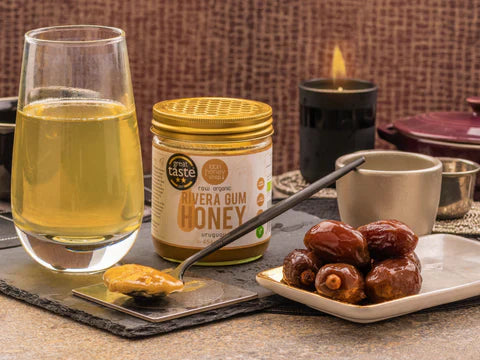
Take a teaspoon of raw organic honey and mix it into a glass of cold or warm water for a simple, refreshing drink.
The honeys we'd recommend during a period of fasting are 20+ Active Raw Organic Coffee Bean Honey and Raw Organic Pink Lychee Honey, thanks to their enzyme content, mild sweetness and pleasant flavour in a drink.
Reference
Meo SA, Hassan A. Physiological changes during fasting in Ramadan. J Pak Med Assoc. 2015;65(5 Suppl 1):S6–S14.
Frequently Asked Questions
1. Is there real research behind these fasting benefits? Yes. A 2015 review by King Saud University researchers, published in the Journal of the Pakistan Medical Association, is a genuine, extensively cited academic source, synthesising findings across many individual studies of Ramadan fasting.
2. Does honey water contain live probiotic bacteria? No, honey is naturally antibacterial. What it genuinely offers is prebiotic compounds that feed the beneficial bacteria already in your gut.
3. How much weight do people typically lose during Ramadan? The reviewed research reports an average of around 2kg over the month, though this varies by individual, fasting duration and diet.
4. Why is what you eat at the end of a fast important? A sudden large intake of processed sugar, fat or spice after a day of fasting can cause indigestion and discomfort. A balance of foods, weighted towards lower-GI options, and a gentle drink like honey water beforehand, is generally easier on the digestive system.
5. Can I use any honey for this, or does it need to be raw? Raw, unprocessed honey retains enzymes and nutrients that heat-treated, filtered supermarket honey loses, so raw honey is the better choice here.
Sources & References
- Meo SA, Hassan A (2015) — Physiological Changes During Fasting in Ramadan, Journal of the Pakistan Medical Association